Friday, April 2, 2010

Horta, Van de Velde, Bauhaus and Bing


It is often suggested Art Nouveau first appeared in France and Belgium. This is mainly considered the case due to the work of the great architect Victor Horta and the designer Van de Velde both from Belgium. Their work first appeared in Belgium; townhouses featured elegantly twining wrought-iron staircases, balconies, and gates. 
Velde moved to Paris and designed a shop for Samuel Bing. The La Maison de l'Art Nouveau shop would give its name to the Art Nouveau movement. Velde designed everything in his own house down to the table silver and cookware. 

He was inspired by English Arts and Craft design and established a bridge between the two. He moved to Berlin and designed the Art School in 1904-11. This school would eventually become the world leading Bauhaus.

Victor Horta designed furniture, light fittings, stain glass panels, door and window frames and hardware. One of his most famous buildings the Tassel House (hotel) was built in 1892. He used flowing curves in the steps and iron railings of the stair way. He painted or stenciled mute coloured patterns on the walls and ceiling. The metal columns were slim, hanging light fittings with shades in curved flower like shapes and the floor was mosaic placed in an S curved flowing pattern.

Horta’s own house is now the Horta Museum. He used white tiles on the walls and ceiling in a brick like fashion. Timbers built in cabinets were created with stained glass inserts. Curved lines dominate the furniture and room.

Horta used a centralized floor plan instead of the usual corridor design of the era. He supervised all the interior decoration and furniture design in all his buildings. The four major town houses he designed Hotel Tassel, Hotel Solvay, Hotel van Eetvelde and the Maison & Atelier are located in Brussels. In 2000 the buildings were listed as World Heritage.
Victor Horta used
·         Iron railings in curved lines
·         Stenciled walls and ceilings
·         Mosaic floor tiles
·         Irregular shapes
·         Exposed cast iron structurally
·         A centralised floor plan
·         Glass and iron facades  
·         Asymmetrical balance
·         White tiles
·         Muted colours (olive, mustard, sage, brown gold, salmon…)

France
Hector Guimard is the architect who developed the style in France. He designed the Parisian Metro subway entrances in 1898-1901.

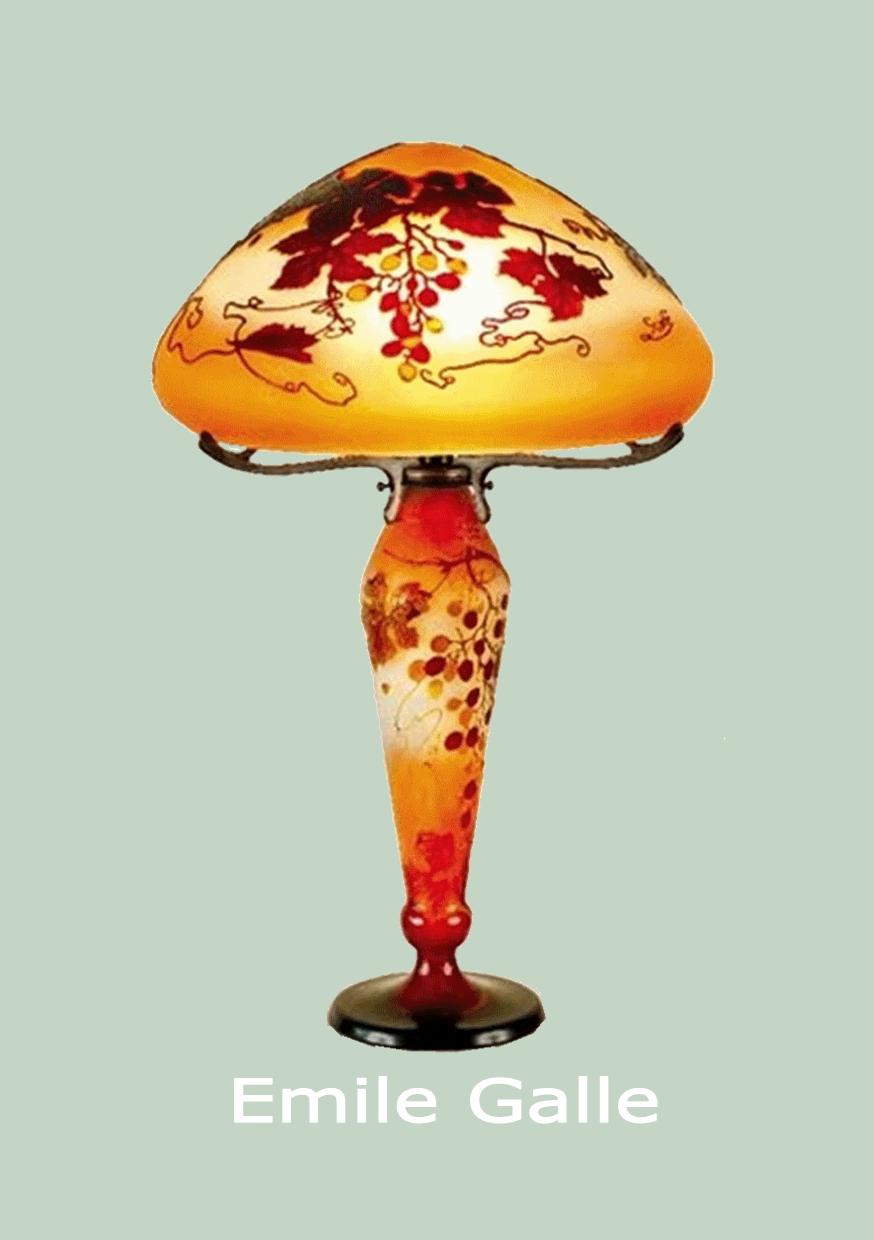
Emile Galle’s glass work, Louis Majorelle’s furniture designs and the posters of the artist Alphonse Mucha are all contributors to the Art Nouveau movement.
Maxim’s Restaurant also had fashionable Art Nouveau interior décor. In 1909 Paris was invaded by the Ballets Russes. They used scenery and costumes in bright primary colours instead of the pastel shades of the era. This influenced the interior decoration of drawings rooms and salons. The rooms become richly textured, with patterned curtains and heaps of cushions in reds, green and orange.  

 
"The artist is nothing without the gift, 
but the gift is nothing without work."
   Emile Zola (1840-1902)


Wednesday, March 31, 2010

Pre-Raphaelites and Art Nouveau


The actual term Art Nouveau is derived from a shop opened by Siefried Bing in Paris in 1896. The shop was called La Maison de l’Art. Yet a hint of the style can be found in the work of William Blake and William Morris. Art Nouveau advocates aimed to create a completely new style with no reference or influence from past styles. Architects were reacting against the drabness of neoclassic and imperial architecture. Art Nouveau was a vital force changing the face of architecture across the Western world.

England
The Pre-Raphaelites are thought to have influenced the Art Nouveau movement. The group made up of Ford Madox Brown, Edward Burne-Jones, William Holman Hunt, John Everett Millais and Dante Gabriel Rossetti was met with critical hostility in Victorian England.


Edward Burne – Jones used medieval models but treated them with a fresh and modern look. The subject matter used was legends, myths and spiritual stories. He broke away from the normal size canvas sizes. Creating works on long horizontal and tall narrow canvases. His compositions were made up of exaggerated dreamy, linear graceful figures. Form was more important to him than colour. He also produced art glass windows and tapestries for the Morris & Co company.


Ford Manox Brown’s paintings are now in high demand. His work was original in British art during his life time and was largely ignored. He used brilliant colour on white backgrounds, naturalistic detail and contemporary subject matter.


Millais painted what is often considered the most important Pre-Raphaelite work ‘Ophelia’. He painted on a white background; flowers, plants and Ophelia floating down the river in precise detail.

Rossetti was torn between his two loves poetry and painting. He paintings were informed and inspired by his favorite authors especially Dante. He worked mostly in water colours developing his own technique ending up with images that looked like art glass work.


The first example of the style outside of painting in England was a chair design by Arthur Mackmurdo in 1882. You can find images of this chair at http://www.huntington.org/huntingtonlibrary_02.aspx?id=5660.

Arthur Liberty also used art nouveau designs in his fabrics. An example of liberty fabrics can be found at http://www.historicstyle.com/artnouveau/fabrics/full/ianthe_lin_det.html. Charles Ashbee also had an influence on English design at this time. The impact of the wonderful flowing illustrations of Aubrey Beardsley can be seen in Art Nouveau design. The new magazine ‘The Studio’ founded in 1893 helped popularize the style in Europe.


You may ask why this is all important. I agree with Goethe who stated:

‘It is impossible to understand 
the present 
without knowing the past’


Monday, March 29, 2010

Is it Art Nouveau or Art Deco?


When I first studied interior design I would constantly muddled up Art Nouveau and Art Deco. I did this until I reminded myself Art Nouveau means new art came first in the late 1800’s and lasted for about three decades. Art Deco was the style of the 1920’s and 1930’s. So I thought I would spend the next few blogs looking at both styles.

All this came to mind while I passing the wonderful shop Passion for Design. They specialise in Art Nouveau and Art Deco decorative pieces.

The most common Art Nouveau motif was peacock feathers. Patterns included abstracted insect wings, bird feathers, shells, vines, flowers and S curves. The hallmark of the style the curved undulating lines known as whiplash lines and plant like forms.

Motifs and Patterns
·         Peacock feathers
·         Insect wings
·         Bird feathers
·         Shells
·         Vines
·         Flowers
·         S curves


Colours were muted and varied. Violet (purple) and yellow were popular. Natural vegetable dyes were used in wallpaper, chintzes and other materials. Art Nouveau has primary a decorative style. The Japanese print influence was also a feature of this style.
 
A series of movements brought unity of painting, sculpture and architecture for the first time. The Art Nouveau influenced every art form including, poster, advertising, jewelry, ceramics, glassware, silver, lamps and clothing fashions. And of course interior design/decorating and architecture. 


The Art Nouveau style was unsuited to mass production and it to decline by 1910. However the style was important; it redefined conventional style mainly in architecture creating relationships between industry and art. This helped pave the way for modern architecture and art.  


Friday, March 26, 2010

Design Life Audit

Do you need to do an audit of your design life?

Interior design has become a trendy profession. Students often comment about how much more is involved in interior design than they originally thought. Although it can appear glamorous, it takes hard work and long hours to succeed.

‘Intelligent people are always open to new ideas’ 
Proverbs 18:15

I was amazed when I looked through the list of interior designers in the yellow pages in the major cities of Australia to see how many designers are listed. When I first started out in the 1980’s the lists were much shorter.

To succeed in interior design these days’ designers need to be many things. Besides having creative and organizational skills there are a number of things a designer needs to be and things they can do to stay ahead of the game. More than ever interior designers need to be aware and adaptable.

Designers need
• Creativity
• Organizational abilities
• Technological expertise
• To be a team player
• To have time management skills
• People skills
• Selling skills
• To be adaptable
• To be flexible
And the list goes on……

Work out your niche
It is important to work out your niche in the market place. To do this you need to know your strengths and weakness. Target your business to your strengths. This may appear obvious but sometimes we struggle along trying to fulfill the many roles involved in interior design practice. It pays to do an audit of our design life every few years. Ask the hard questions. Am I enjoying my work? Am I making as much money as I desire? When do I feel a sense of achievement? Am I stressed? How could I improve my work life?

Work out your strengths and weakness by asking questions
1. What do you love about your work?
2. What do you hate about your work?
3. Am I enjoying my work?
4. Am I making as much money as I need/want?
5. What activities give me a sense of achievement?
6. Am I stressed?
7. How can I improve my work life?

Some experts in the field recommend designers specialise. To base your design business to a particular niche that enhances your strengths. It can be based on something you excel at or the most popular need in your area.

Success comes by:
1. Continuing to learn as much as you can
2. Being professional
3. Adapting yourself to different seasons in the market
4. Looking at opportunities to increase your options
For example:
• Solar panel installation
• Help others become green
• Clean technology consultants are in high demand
• Emission Trader

You may be very successful and completely happy with your design life. So you can ignore all of the above. But it is helpful and encouraging to see the number of diverse skills and the abilities we need and often have.

I left the field of design for a number of years. When I came back I did a refresher course and had a close look at my strengths and weakness. Although I am a good organizer and manage my time well my weakness was in the business side of the design business. I hated dealing with money, doing quotes and accounts.

My main strengths were my people skills and creativity. I had also found I loved to encourage others, to teach and write. So I have found my niche I now combine my people skills, training skills and artist skills by tutoring, writing, some consulting and doing the occasional painting. I don’t think I have ever been as happy in my work as I am now.

‘Get all the advice and instruction you can 
and be wise the rest of your life’
Proverbs 19:20

One of my favorite books is the book of proverbs. Every time I read it (which I try to do every day) I find new gems of wisdom to help me along life’s way.

I hope you find or have found your niche and happiness.

Wednesday, March 24, 2010

The Funky Graphic Illusion of Quantum Innovations Join Sample Board Online


Sample Board Online welcomes Quantum Innovations on board. Funky Graphic Illusions 3D decorative surfaces can be used in the home, retail, corporate and hospitality industries. This Australian company is a market leader in the design, production and supply of decorative panels and merchandising display systems.


Use Sustainability Initiatives

Quantum Innovations is a company also committed to the reduction of carbon emissions, energy saving procedures, recycling procedures and follow other sustainability initiatives.


Graphic Illusion 3D Decorative Surfaces

Graphic Illusion is a range of 3D decorative surfaces. They come in a range of textures, colours and patterns. The panels are 1200 x 2400 and can be placed horizontally or vertically. Made of MDF the panels have a Thermolaminate finish.


A Vast Range of Colours, Textures and Patterns

Quantum’s merchandising display systems include: Slotpanel, Slotpanel Display and Smart Slot Slotpanel come in a range of 20 solid colours including midnight, illusion and expresso. There is also a range of wood grains and patterns including; Victoria Ash, Jarrah, brushed aluminium, stainless steel and silver mirror.


Slotpanel and Slotpanel Display

The Slotpanel Display is available in hundreds of colours trimmed with aluminium. The five most popular colours, white, black, blue, straight beech and seal grey are always in stock. The displays come with lockable castors, removable legs and numerous accessories.

Smartslot Panels
Smartslot panels consist of routered slots that can be machined in the horizontal or vertical position. The MDF boards are available in a wide range of colours, prints and woodgrains

Monday, March 22, 2010

Day of Wine & Roses


For two nights and one day we enjoyed a well earned break from Sample Board Online among beautiful roses and vineyards. Last week we took a quick drive over the border to South Australia to see my Mum. The visit to the world famous Barossa Valley wine region was a highlight of the trip. We have lived in South Australia and have visited the valley many times.


As you travel along the hills and dales toward the main villages of the valley the rolling hills, stone walls and delightful stone buildings are a sight to behold. Many of the settlers in the Barossa came from Germany. 


However it is interesting to note the oldest family owned winery in Australia is Yalumba. It was founded in 1849 by Samuel Smith an English man. Over the years we have had great times in the Valley. One of Mum’s last outings was to a Big Band event performed by the Australian Orchestra at a Barossa winery.  

On this visit we stayed in a room on a hill with a balcony overlooking the Chateau Barrosa and rose garden. I have not visited the Chateau before and was delighted to find not only a gift shop and cellar door but an amazing antique collection housed in the sparkling formal rooms with smooth shiny marble floors and three glittering Marie Theresa style chandeliers. 


The antique collection was gathered over the years by Herman and Inge Thumm. Herman founded Yaldara in 1947 when he arrived from war torn Europe. After he had established his winery he and Inge started to research and collect antiques. Their collection of 19th century porcelain (Meissen, Sevre, Worchester, Chelsea and Stinton) is considered one of the best in Australia       

     
Also on view a pair of 19th century rococo marble topped consoles, 19th century Chinese ebony table, English gilt wood sofa and chairs around an oval walnut salon table, a writing desk in the Napoleon III Louis XV style and a mahogany sideboard in the Sheraton style.  

One of the most interesting items is an 18th century leather screen. The Chateau Barrosa was built to house this wonderful collection.


Hemann Thumm said 

‘The happy relationship between wine, 
art and creativity can be traced back into antiquity’

On this occasion we found this to be so.  

Friday, March 19, 2010

Sample Board Online looks at the links between work of 1920 Sonia and 1970’s Susan


Sonia was a painter, textile designer and set designer in Paris during the 1920’s and 1930’s making her part of the fashion scene of Cocco Chanel. She used geometric designs, colourful shapes and lines.

Jacques Heim a Parisian designer and manufacturer of furs shared a fashion studio with her and she participated in the Art Deco International Exposition in 1925.


Sonia Delaunay brought the intense colours and forms of Van Gogh, Gauguin and Cubism into textiles. She expressed colour in terms of musical scales, harmonies and rhythms.


The influence of the Russian patchwork quilts of her childhood were reflected in her work.


Susan Collier was inspired by the work of Sonia in the 1970’s. One of her most famous designs when she worked at Liberty Studio was the Kasak. I remember this style was still popular in the 1980’s.


Sonia stated: 

‘He who knows how to appreciate colour relationships, the influence of one colour on another, their contrasts and dissonances, is promised an infinitely diverse imagery’